
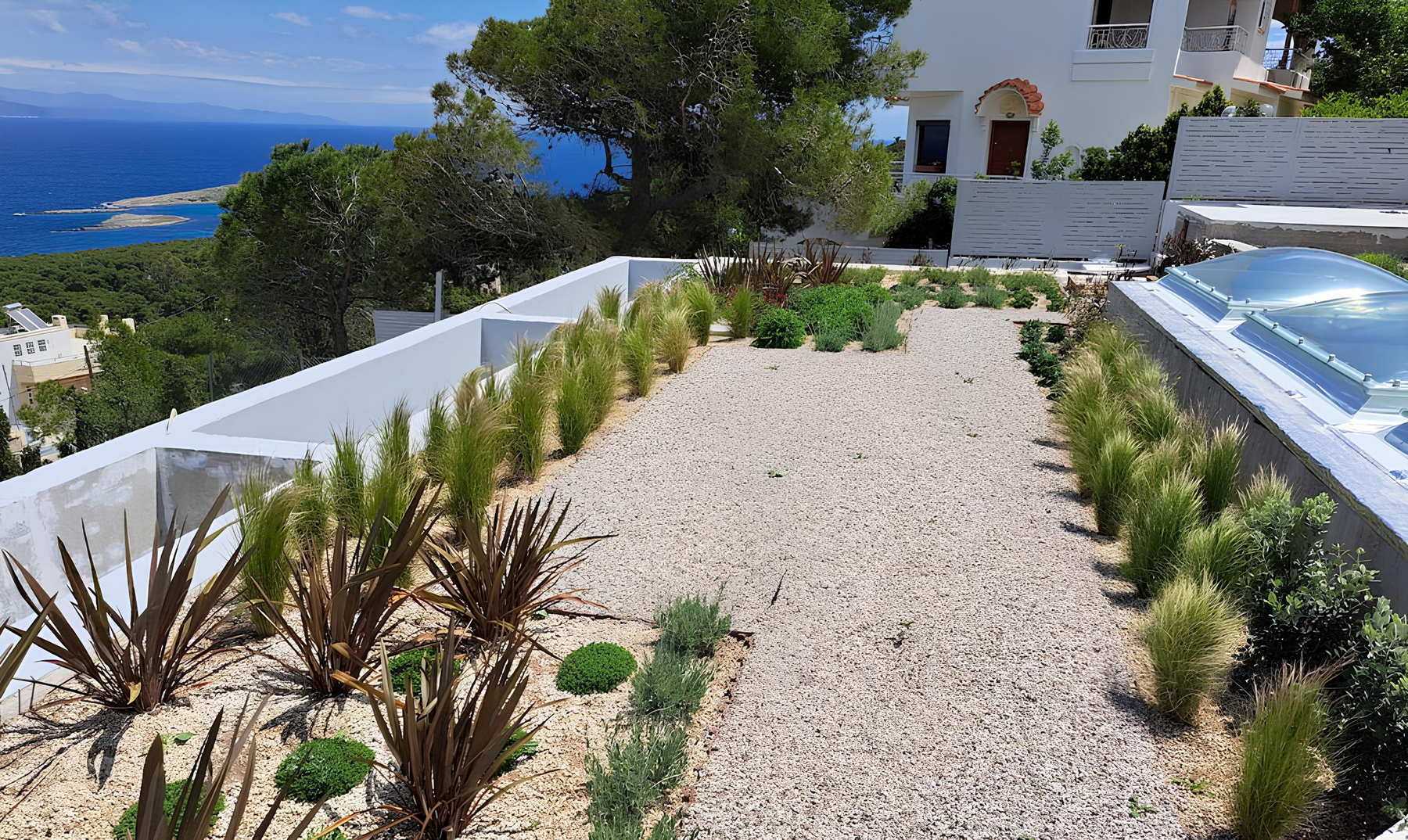
Extensive and Intensive Green Roof
Green roofs are a modern solution for sustainable architecture that improves the energy efficiency of buildings, contributes to reducing the heat island of cities and upgrades the urban environment. However, before starting the construction of a green roof, a basic question arises:
Do we mainly want an environmental upgrade of the building or a fully functional garden on the roof? Depending on the answer, the appropriate system is chosen. Let’s analyze the two systems in depth.
What is an Extensive Green Roof?
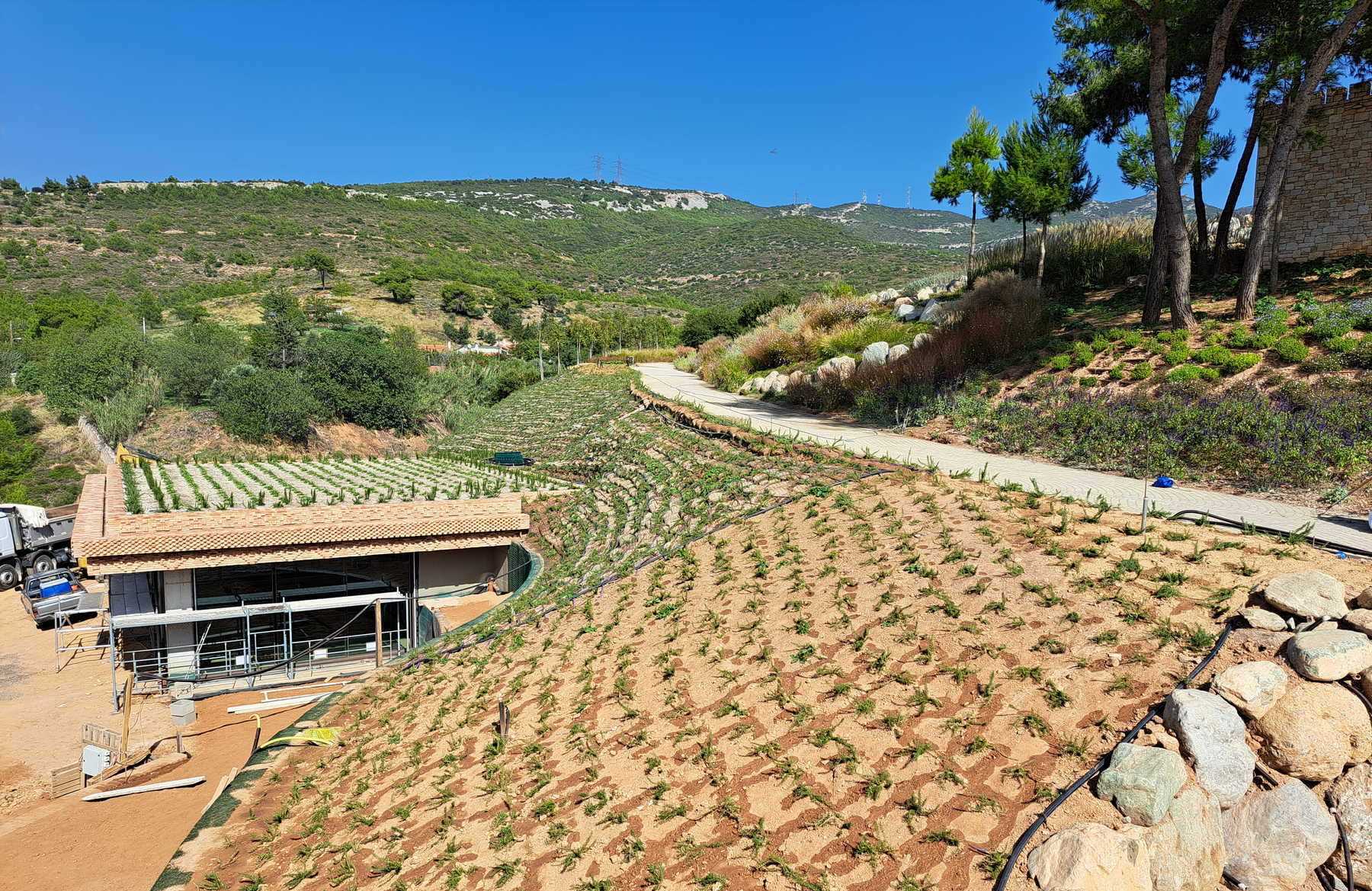
The extensive system is the “basic” form of green roof and is widely used in residential, industrial buildings and public works. It is the lightest and simplest form of green roof. It is mainly designed for ecological and energy improvement of the building and not for intensive use by people.
Technical Specifications
- Substrate depth: 8–15 cm
- Saturated weight: 120–150 kg/m² (may vary by system)
- Planting type: sedum, herbaceous plants, low aromatic, hardy Mediterranean species.
- Irrigation: limited or seasonal
- Maintenance: 1–2 inspections per year
System Structure (Stratigraphy)
A properly designed extensive system includes:
- Waterproofing membrane
- Anti-root protection
- Drainage element
- Separation filter
- Special lightweight substrate
- Plant liquid
The plant cover consists mainly of species that are highly resistant to drought, intense sunlight, winds and temperature changes. The most popular species mentioned are sedum, low-growing plants or creeping forms, grass species and resistant plants. Certified solutions, such as Optigreen systems, ensure controlled runoff, stable load and protection of the waterproofing in the long term.
Advantages
- Low load on the supporting structure
- Significant improvement in heat & thermal inertia
- Reduction of the urban heat island effect
- Low installation cost compared to intensive
- Ideal for large surfaces
Limitations
- Not intended for daily use
- Limited variety of plantings
- Does not create “living space”
When is it the solution?
- In existing buildings with limited static adequacy
- When the goal is energy upgrading
- In large-scale projects (e.g. warehouses, schools, apartment buildings, industrial buildings).
What is an Intensive Green Roof?
An intensive green roof is essentially a regular garden on top of a building. It is a fully landscaped green surface that can accommodate plantings, paths, cleaning and recreation areas. The intensive system transforms the terrace into a fully functional outdoor space.
Technical Specifications
- Substrate depth: 20 cm up to >1 m (depending on planting)
- Saturated weight: 300–600+ kg/m²
- Planting: shrubs, trees, lawn, perennials
- Irrigation: fully automated system
- Maintenance: regular, as in a conventional garden
Additional Technical Requirements
- High-precision static study
- Enhanced drainage
- Irrigation & water supply system
- Safety design (parapets, anti-slip surfaces)
- Provision for lighting networks and electrical devices
Advantages
- Creation of a living or recreational space
- Significantly increases the commercial value of the property
- Allows high aesthetic and architectural freedom
- Improves microclimate and quality of life
Limitations
- Increased construction costs
- High static instructions
- Continuous maintenance required
When is it chosen?
- In hotels and commercial properties
- In luxury homes
- When the terrace is designed as a main use area.
What Role Does Technology Play?
Green roofs are complex technical systems and not just a surface with soil and plants. Whether an extensive or intensive system is chosen, their success and long-term operation depend largely on the technological infrastructure and the correct stratigraphy under the planting.
In practice, a green roof functions as a multi-level system of water management, construction protection and vegetation support. The technology that ensures that all layers work together properly to create a sustainable ecosystem on the roof of the building.
Stratigraphy is the basic structure on which a green roof is based. Each layer has a specific role and contributes to the proper functioning of the system. A typical green roof system usually includes the following layers:
Waterproofing and root protection
The waterproofing membrane protects the building from water penetration. At the same time, the root protection.
Protective layer
These are protective materials that use mechanical stress and protect the waterproofing during the construction and operation of the system.
Drainage layer
One of the most important technical elements. It ensures that excess water is properly removed, preventing the formation of stagnant water that could damage the plants or the roof structure.
Fine particle retention filter
The filter geotextile allows water to pass through but prevents small particles of the substrate from clogging the drainage system.
Planting substrate
It is not simple soil. It is a special lightweight technical substrate, designed to provide good drainage, root aeration and sufficient nutrients for plant growth.
Vegetation cover
The final layer of the system, which is selected depending on the type of green roof (extensive or intensive) and the climatic conditions of the area.
The Contribution of OPTIGREEN Certified Systems
In the construction of modern practical technical certified systems of these solutions, such as Optigreen. These systems have been developed through extensive research and testing and offer significant advantages over improvised solutions. The key elements they ensure are:
Controlled drainage
Proper water management is critical for the survival of plants and the protection of the building. Tailored specialized drainage elements have:
- the removal of excess water
- the retention of a quantity of moisture for the plants
- the avoidance of hydrostatic pressure on the waterproofing
Protection of the waterproofing
The waterproofing is the most sensitive element of the roof. Green roof technological systems include special layers that protect the waterproofing membrane from:
- mechanical damage
- root penetration
- thermal stress
Constant and controlled weight
One of the key issues in green roofs is the load transferred to the structure. Modern systems use lightweight, high-strength materials to:
- keep the weight low
- avoid substrate subsidence
- ensure stability in the planting structure
Long-term performance
Certified systems are designed to operate reliably for decades. This means:
- reduced maintenance needs
- better resistance to extreme weather conditions
- maintaining the functionality of the roof over time
The construction of a green roof is a long-term investment. If the technical infrastructure is not designed correctly, problems such as: water leaks, damage to the waterproofing, poor plant growth, moisture accumulation and excessive weight may occur.
On the contrary, with properly designed systems and construction requirements followed, the green roof can operate effectively for 30 to 50 years, offering significant environmental and active results.
Which one to choose in the end?
The choice depends on:
- the static business of the building
- the budget
- the use you want to have of the space
- the level of maintenance you can support
If you just want energy upgrading → extensive.
If you want a functional garden → intensive.
In many cases, a combination of the two is easy.
The Right Decision Starts with the Study
The success of a green roof is not judged only by the type of system.
ECOVERTI approaches each project based on:
- static evaluation
- usage analysis
- technical specifications
- long-term sustainability
A green roof is a technical project with a life span of more than 30–40 years.
A wrong choice can lead to increased loads, moisture problems or high operating costs.
Conclusion
There is no “best” system. There is the right system.
The right choice is not based only on cost, but on function and lifespan.
If the goal is energy and environmental upgrading → extensive system .
If the goal is the creation of a real outdoor living space → intensive system .
With proper design, both solutions can perform exceptionally – technically, energetically and aesthetically – for many decades!